Government House

Admiral Chao Phraya Ram Raghop (M.L. Fuea Phungbun) was the son of Phra Nom That, the Royal wet nurse of King Vajiravudh (King Rama VI), and at the age of 13 entered into service to the then crown prince. The crown prince had him enrolled in Mahalek Luang School where he studied until the age of 18, after which he entered government service as a reserve officer, eventually coming to serve King Rama VI. He quickly became a trusted aide who was always close by the king at all circumstances, even when government officials seemed reluctant to approach the monarch. On Chao Phraya Ram Raghop’s twenty-first birthday, the king issued a memorandum stating that Chao Phraya Ram Raghop had no equal. Then, on Chao Phraya Ram Raghop’s twenty-fourth birthday, the king presented him with this property and had the Villa Norasingh built. Chao Phraya Ram Raghop remained close by the king’s side until the monarch’s demise.
In the letter granting this property, King Rama VI wrote:
This plot of land behind the 1st Infantry Barracks in the Suan Dusit sub-district belonging to the Treasury Department measures slightly over 190 metres at the north and south running beside Khor Sua 4 and Luk Luang roads respectively and 182 metres at the east beside Hok Road 250 metres and west from Khlong Lae to Khlong 6 for about 246 metres… Chao Phraya Ram Raghop (M.L. Fuea Phungbun) continues to serve me faithfully, I grant him this property to build a home... This document also grants him the right to sell or do as he wishes with the property…
The money for construction was provided by King Rama VI, and the villa was designed by the Italian architects Mario Tamagno and Annibale Rigotti, and built under the supervision of the Italian craftsmen Carlo Allegri and A. Jaiwanni Gallo, the team that had designed and built the Ananta Samakhom Throne Hall.
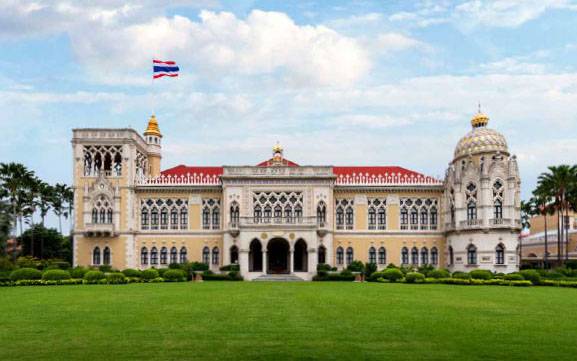
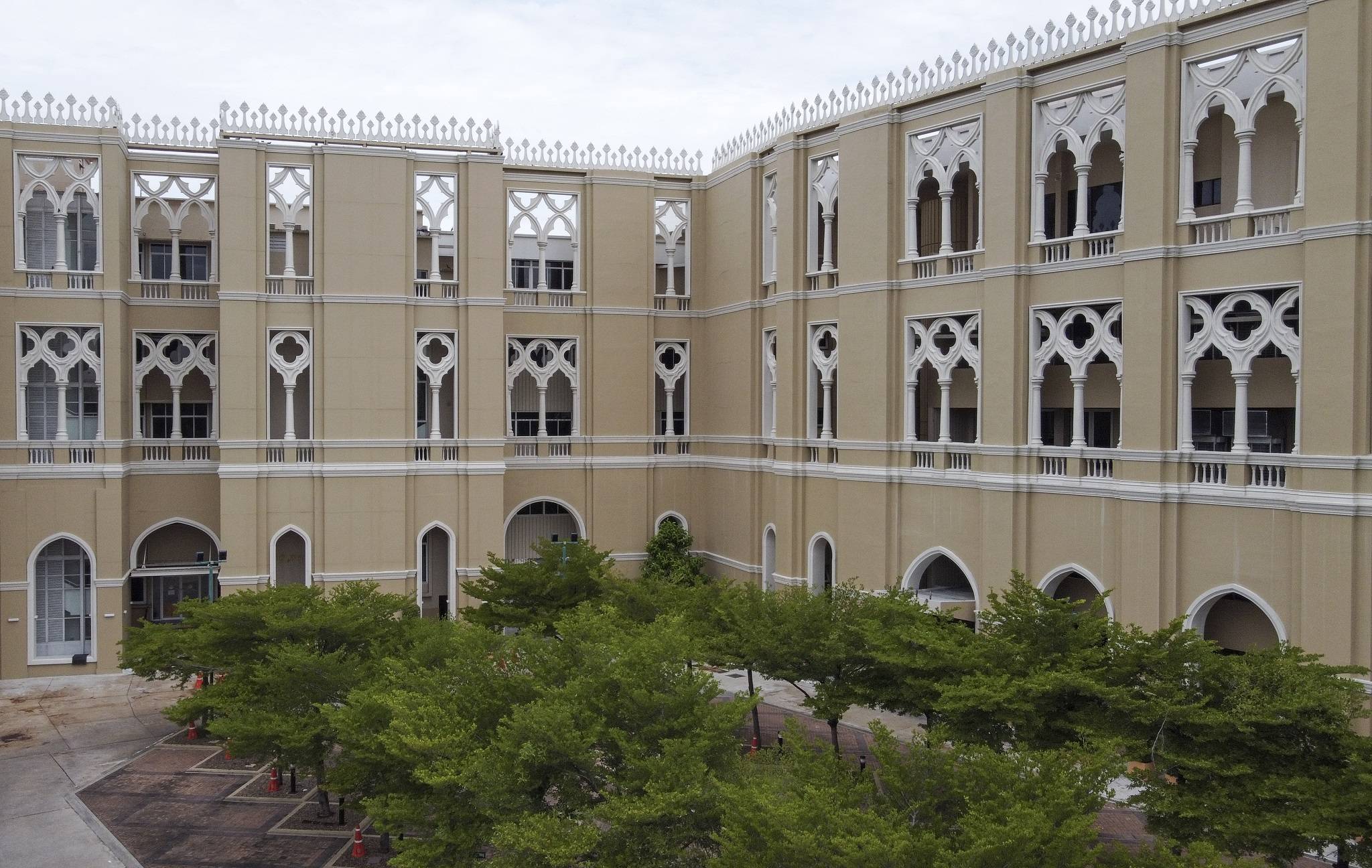
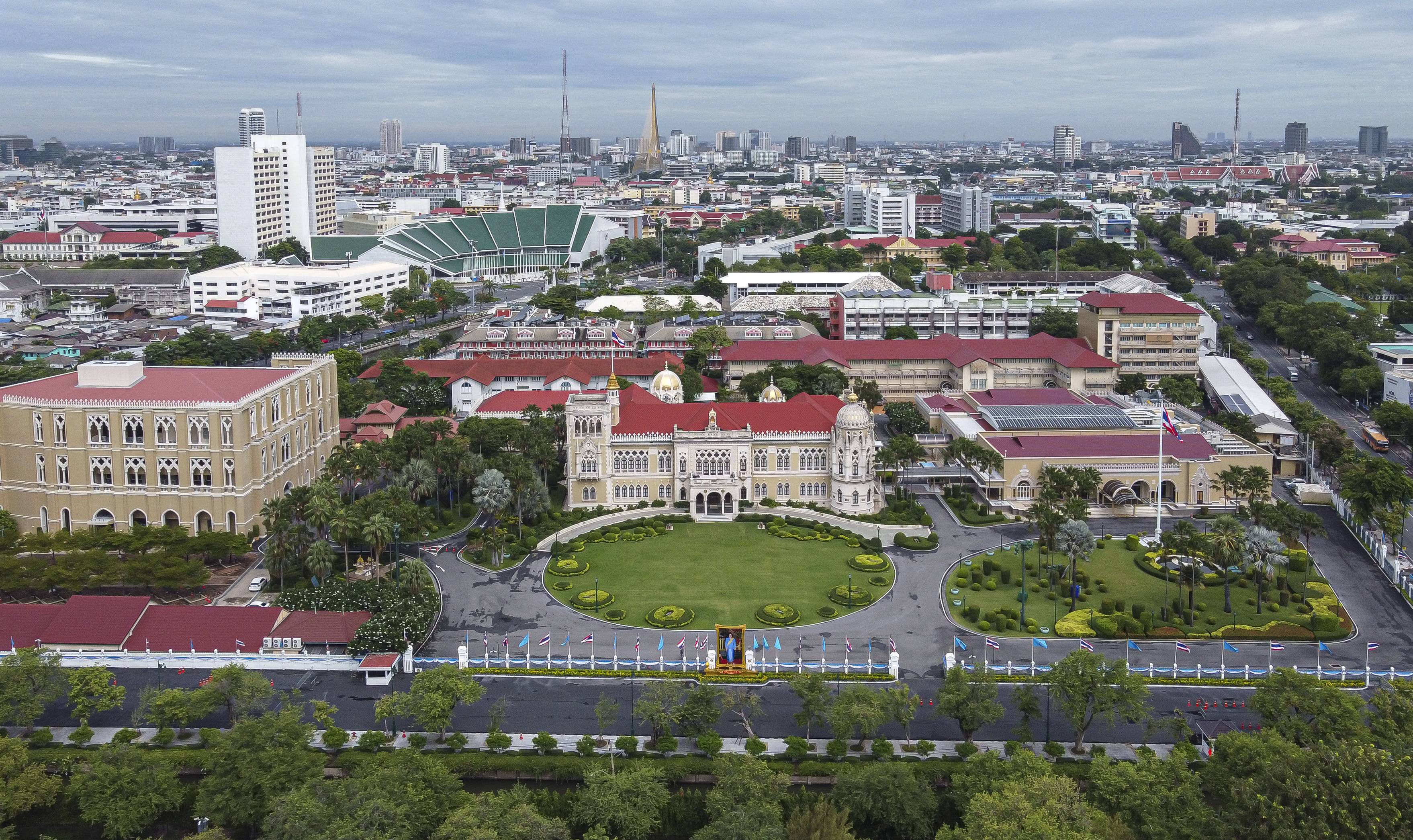
Villa Norasingh is modelled after the Ca’ d’Oro Palace in Venice, Italy, and thus features a Venetian Gothic style influenced by Byzantine and Moorish artistry that beautifully blends concepts and decorations of the East and West. After construction commenced but before it was finished, King Rama VI passed away and construction ceased. The foreign team then returned to Italy before Villa Norasingh was completed.
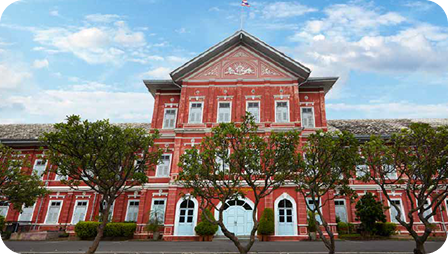
In 1941, Chao Phraya Ram Raghop sent a letter to the minister of Finance, Pridi Banomyong, offering to sell Baan Norasingh to the government for two million baht as it had become too expensive to maintain. Initially, this offer was rejected by the ministry, but in September of that same year, Field Marshal P. Pibulsonggram, the Prime Minister at the time, saw its potential as a reception hall to receive guests and agreed to purchase it for one million baht. Since then, it has served as the location of Government House. It was also given the name ThamNiap Samakkhichai, which translates as “House of Unity”, the Thai name for Government House. The Italian professor Silpa Bhirasri, who was then based at the Fine Arts Department, was responsible for completing the project, employing engineering students of Silpakorn University that he had helped to establish.
It is often said that the elegance of Villa Norasingh conveys the strength and stability of the Royal Thai Government and reflects the honour and pride that the Thai people have in the Thai identity.