THAI KHU FAH BUILDING


This two-story structure was built on a site of approximately 11 acres (4500 m2) on the grounds of Baan Norasingh to serve as the main building of Government House. There are a number of other historic buildings found adjacent to this structure, including the Nari Samoson and SaengAthit buildings.
The Kraison Building was originally known as Baan Norasingh, which was owned by a member of the royal family, Phungbun na Ayudhya, or His Royal Highness Krom Luang Rak Ronaret, also known as Prince Kraison. Thus, it was first called Kraison Building after which its name was changed to Thai Khu Fah Building. Its architecture and decorative art are considered some of the most outstanding in Thailand and its exterior and interior beauty captivating to all. It has been well preserved because of its priceless cultural heritage, and in 1989, it was presented with the Outstanding Architectural Award by the Association of Siamese Architects under Royal Patronage.
Exquisite Exterior
The Thai Khu Fah Building accentuates a Venetian-Gothic style. The exterior walls are made of washed stone to give them a porous effect. They are also decorated with beautiful, stucco, lotus patterns and installed with elegant arched doors and windows, luxurious verandas and intricate railings, pillars, cantilevered eaves and flagpoles. Rose-coloured mullions between some of windows are painted to resemble the marble walls of the entrance to Ca’ d’Oro Palace.
The building is shaped like a horseshoe with rooms located in both wings connected by a central foyer and staircase. At the front is an arch-covered entrance that can be reached by an oval driveway. The ground floor doors and windows are decorated by Gothic-style, stucco arches while the upper story comprises Gothic-style round columns. The right wing has a circular extension with a dome roof decorated with gold mosaic patterns, while the left wing extends to a three-story square tower. Adjacent to this is a smaller, octagonal tower with a flagpole on top. Much of the building’s arched decorations in addition to the dome were made to resemble the Ca’ d’Oro Palace in Venice.
In the right wing at the back of the building is a small door that leads to a narrow spiral staircase with nine landings, which is striking when viewed from every angle. After reaching the top, there is a small door that leads outside to a narrow walkway around the roof made of rust-red anthurium coloured square tiles arranged in a diamond shaped pattern. The roof and walkway are lit at night by delicate lighting. At the front of the building, there is also a rooftop terrace where an impressive yellow statue of the Hindu god Brahm is enshrined. The curved, southwest corner of the building features a sculpted rooster head below the cantilevered eaves and above an awning-covered terrace. It is believed by some that Field Marshal P. Pibunsonggram had this installed as he was born in the Year of the Rooster. Others, who are descendants of the original inhabitants of this neighbourhood, say that the rooster head motif is as old as the house and was for the wife of the original owner, Khunying Prachuab, who was also born in the Year of the Rooster.
Elegant Interior
Upon entering the building is a large hall, or foyer, where there is a wide marble staircase that splits before reaching the upper floor. The wall between these stairways has as its centerpiece the symbol for the country’s first constitution. To each side of this symbol are air vents camouflaged by beautifully patterned covers that enhance the overall impression and demonstrate the ingenuity of Italian architecture that provides natural, cooling ventilation.
The upper floor also has a large central foyer with a balcony. To the left is the office and dining room of the Prime Minister. To the right are the offices of the Secretary-General of the Prime Minister and other senior staff government officials. The architecture and décor of Thai Khu Fah Building is exquisite as the well-preserved stucco patterns and finish, gilding and painting reflect the skill and artistry of Thai craftsmen and artisans of the past.
Important Rooms
The important rooms in the Thai Khu Fah Building are named for their inspired colour scheme exhibited in the room’s décor and furnishings.
The Golden Dome Room
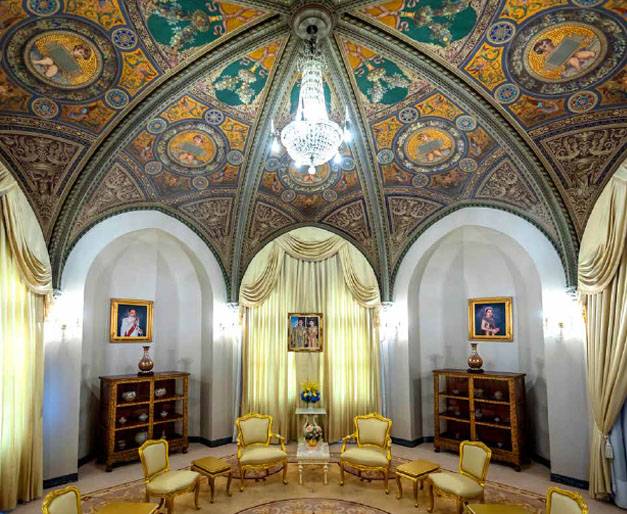
Here, guests are welcomed and introduced to Government House before entering The Ivory Room to the right. The ceiling is vaulted and decorated with colourful Thai and European influenced fresco paintings. The arched windows with golden, yellow curtains are designed to support the dome ceiling.
The Ivory Room
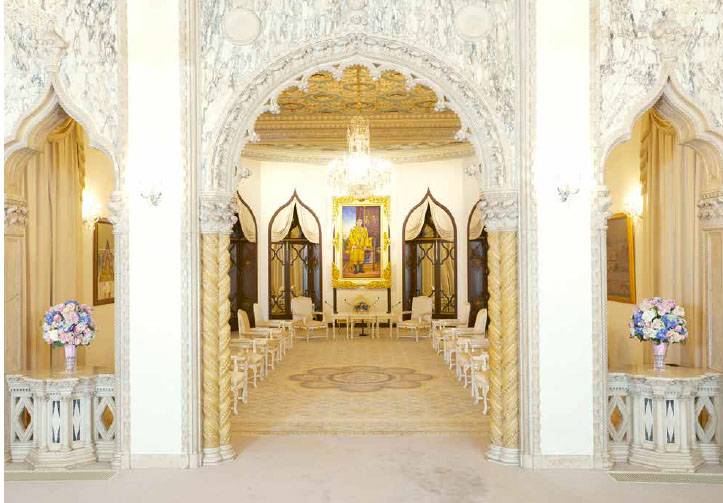
This is the Prime Minister’s official reception room to welcome and meet with high-ranking dignitaries, such as heads of state and government, ministers and foreign envoys. There is a small foyer where the Prime Minister will greet his guests, and they will sign the guestbook. Here also, ceremonies will be held to bestow awards and decorations upon guests. The inner room is used for meetings and discussions. Chairs and tables will be arranged in a U-shape with the guest delegation sitting to the Prime Minister’s right. To the Prime Minister’s left sit the Thai delegation, comprising high-ranking officials from government agencies. In the past, there were a pair of magnificent ivory tusks decorating the room that had been bestowed by Queen Rambhai Barni of the Seventh Reign (King Prajadhipok, or King Rama VII). They now reside in the Royal Palace.
The Purple Room
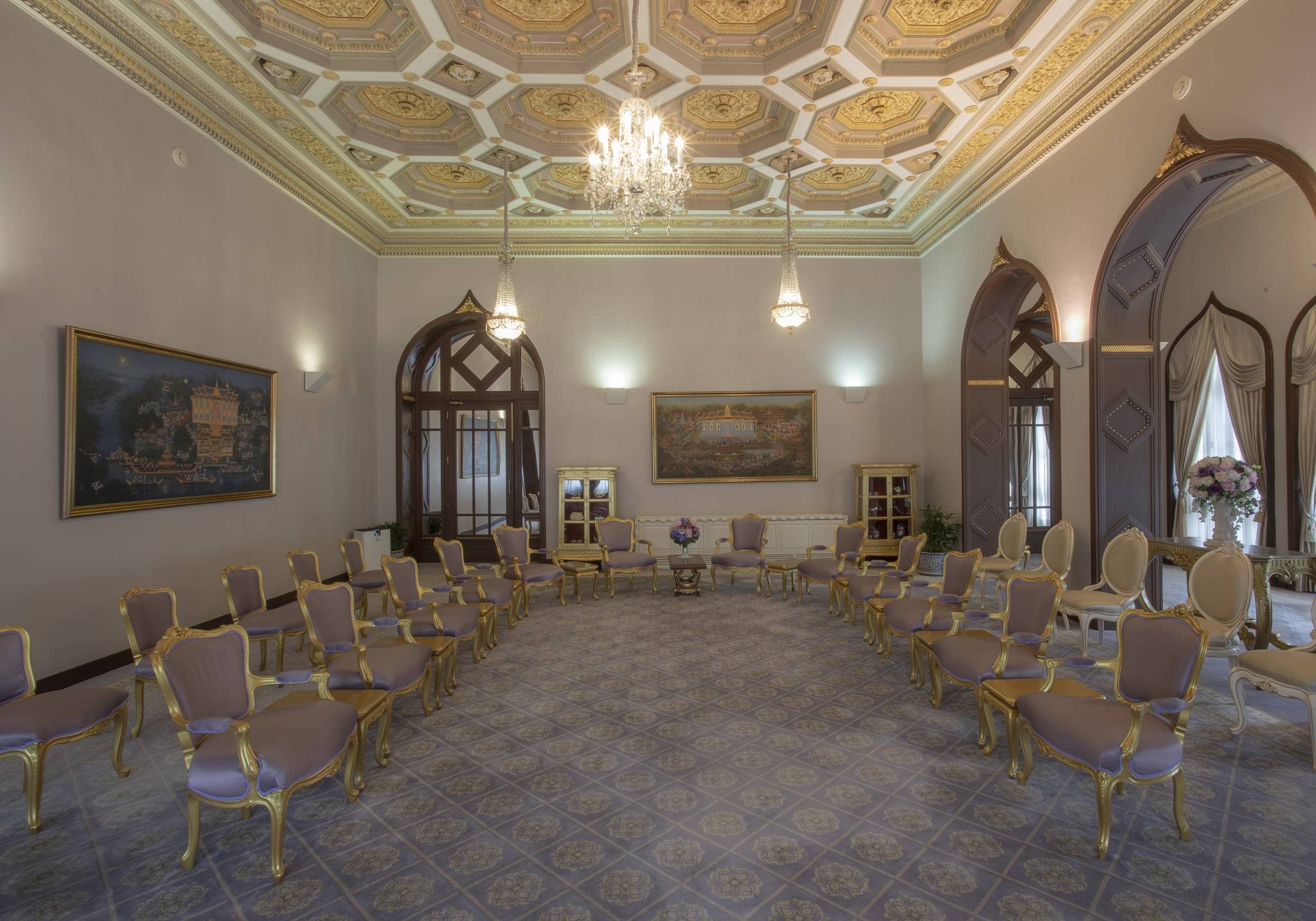
Located in the left wing, this room is divided into two reception areas. The outer area is used to receive guests who call on the Prime Minister, but not necessarily in an official state or government capacity. These can include representatives of governments, the military, international agencies, civil society organizations, business delegations, or other notable persons. The other area that protrudes from the front of the building is called the Purple Dome Room and serves as a reception area for guests. The ceiling is decorated with intricate stained glass mosaics and paintings of birds.
The Green Room
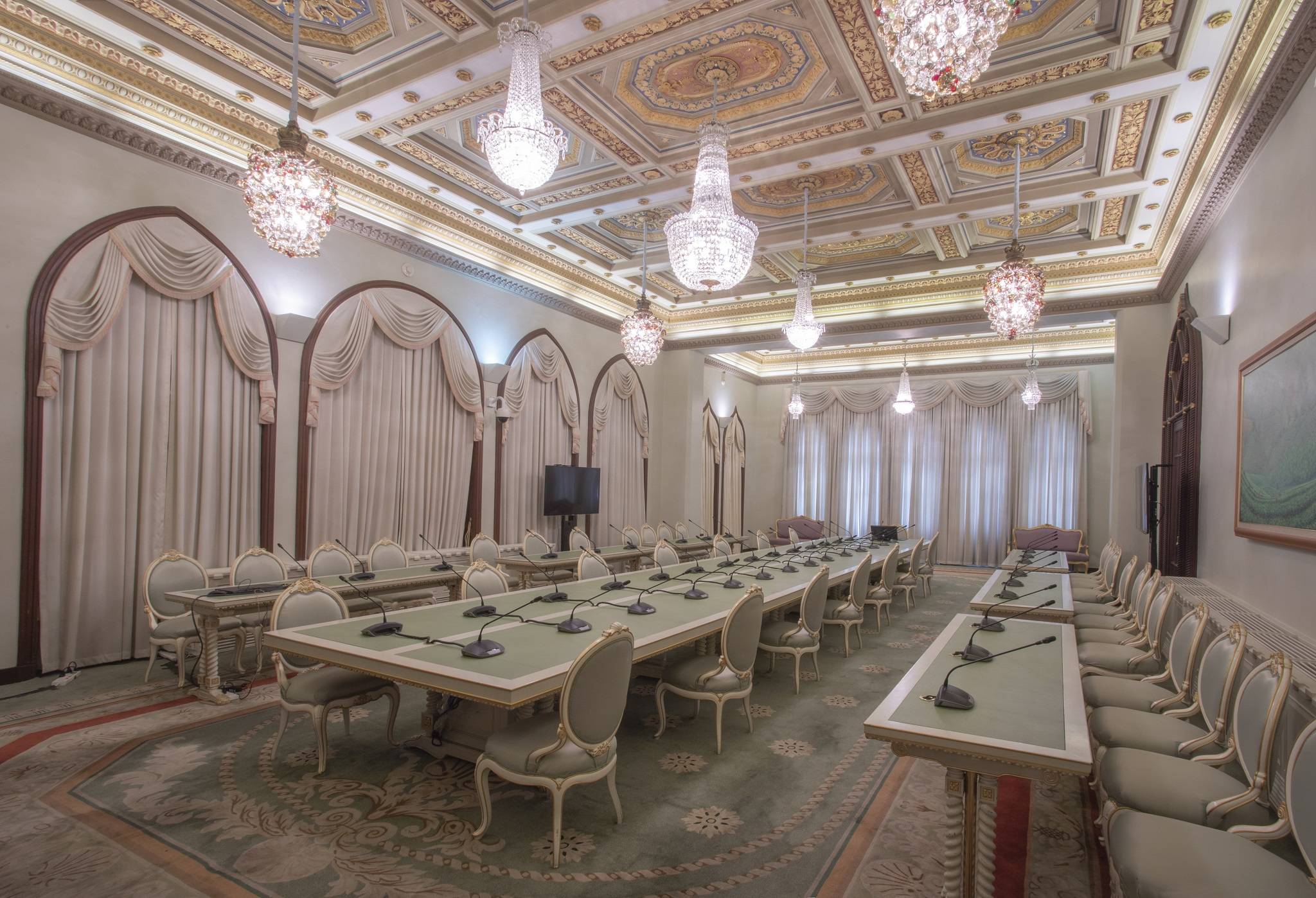
This is a very large conference room used for formal meetings chaired by the Prime Minister, and has on several occasions been the venue for official meetings between Thai and foreign delegations. An outstanding feature of the room is the row of large, grape-shaped chandeliers. The leaf pattern on the green carpet matches the pattern on the ceiling, and there is a painting of people collecting tea leaves on the wall.