NARI SAMOSON BUILDING

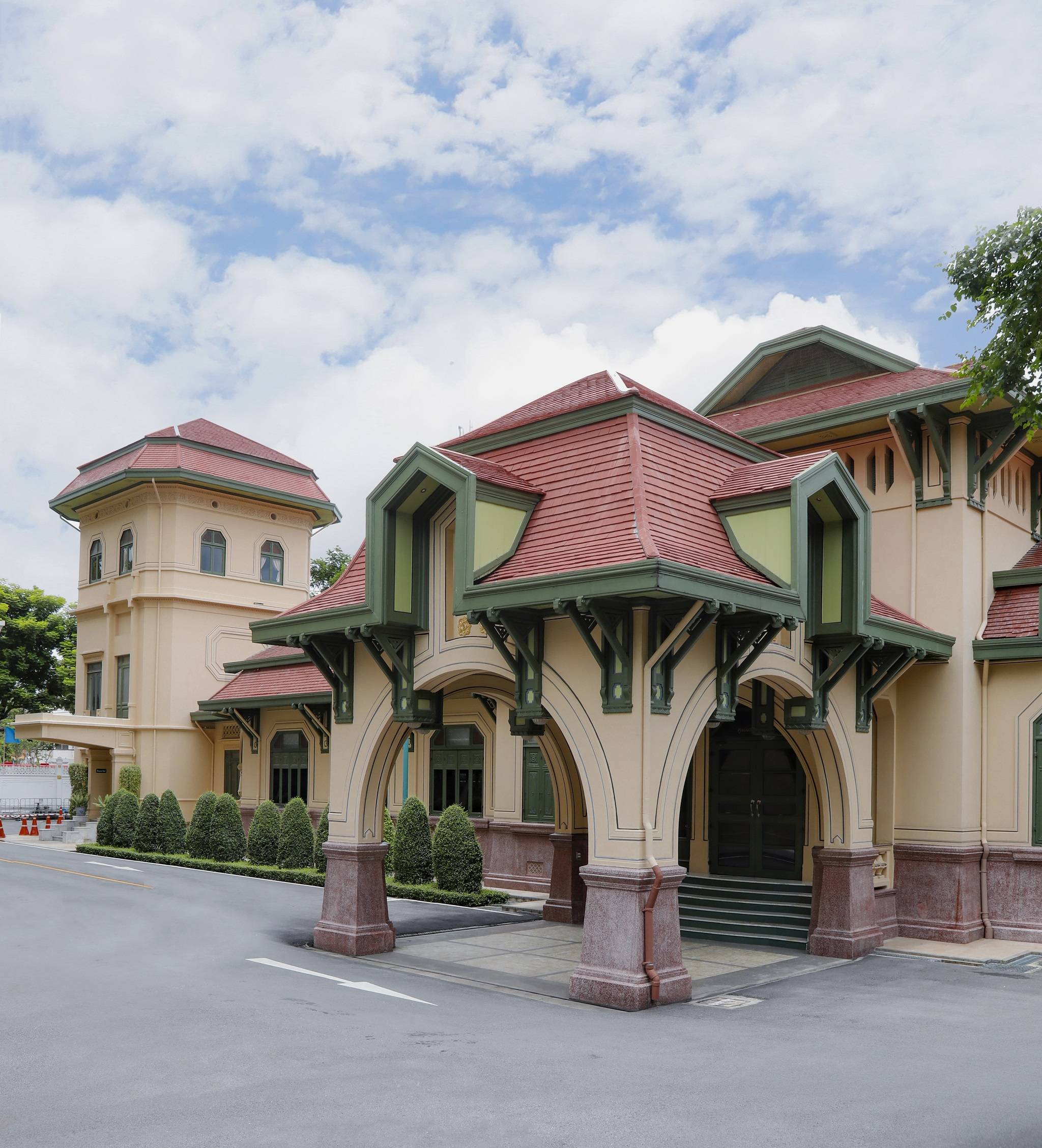
The Nari Samoson Building stands behind the Thai Khu Fah Building at the upper end of a moat known as the “Lotus Pond” because of its many red lotus flowers. During the current administration of Prime Minister Gen. Prayut Chan-o-cha (Ret.), the grounds around the building were relandscaped to increase the number of lotus flowers and enhance the building’s timeless appearance.
When first built, it was called the Phra Khan Building and was the temporary residence of Chao Phraya Ram Raghop while he waited for construction to be completed of the Kraison Building (now known as the Thai Khu Fah Building). Once finished, the body of Thao Indrasuriya (ML Chua Pheungbun), the sister of Chao Phraya Ram Raghop, was laid in state here following her demise. Later, it served as dressing chambers and a lounge for theatrical performers. Then, during the premiership of Field Marshal P. Pibulsonggram, the building’s name was changed to Nari Samoson when the Prime Minister’s wife, Thanpuying Laaid Pibulsonggram, used it to host meetings and other activities. Later, during the premierships of Field Marshal Sarit Thanarat and Field Marshal Thanom Kittikachon, the building’s name was changed to “TuekBoriharn”, or Administration Building, as it was employed for conducting state affairs.
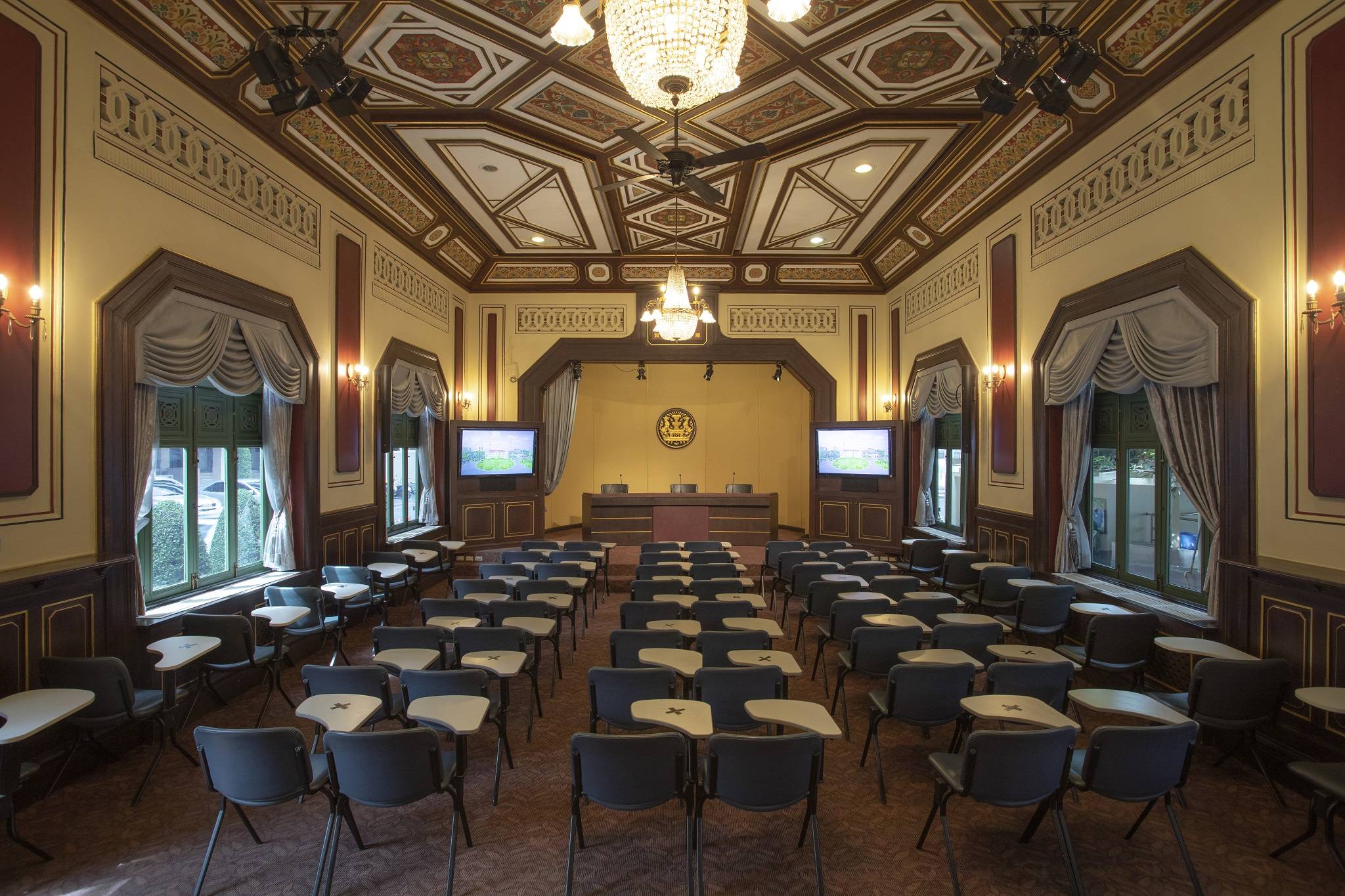
The Nari Samoson Building underwent major renovations during the premiership of Gen. Chatchai Choonhavan after which it became the venue for government press conferences, which it continues to do until now. Throughout the more than 100 years since its completion, the Nari Samoson Building has been meticulously cared for and maintained. In recognition of this, in 2005, the Association of Siamese Architects under Royal Patronage presented the Nari Samoson Building with its Award for Outstanding Art and Architecture Conservation, which was bestowed by Her Royal Highness Princess Maha Chakri Sirindhorn.
Government House Press Relations
The principal purpose of the Nari Samason Building is to serve as a government media centre with the same room in the right wing still used to hold press conferences, usually by the Government Spokesperson. The exterior of the building remains the same except for the washed stone walls with stucco patterns being repaired and repainted. While the Fine Arts Department is responsible for the upkeep of the building’s exterior, the interior is maintained by the Royal Thai Army, which regularly installs new carpets, curtains, air conditioning, and press conference backdrops to present a modern appearance.
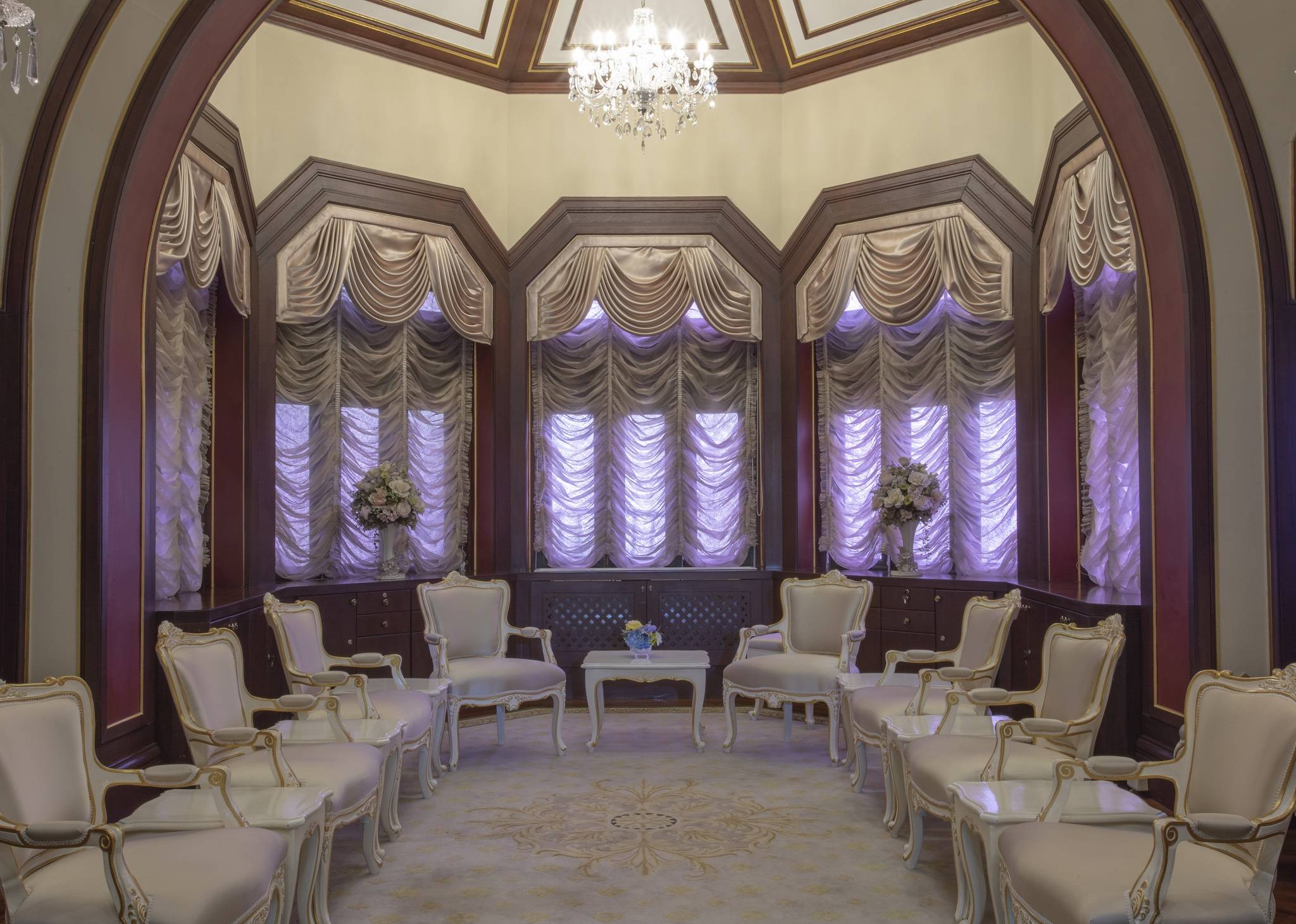
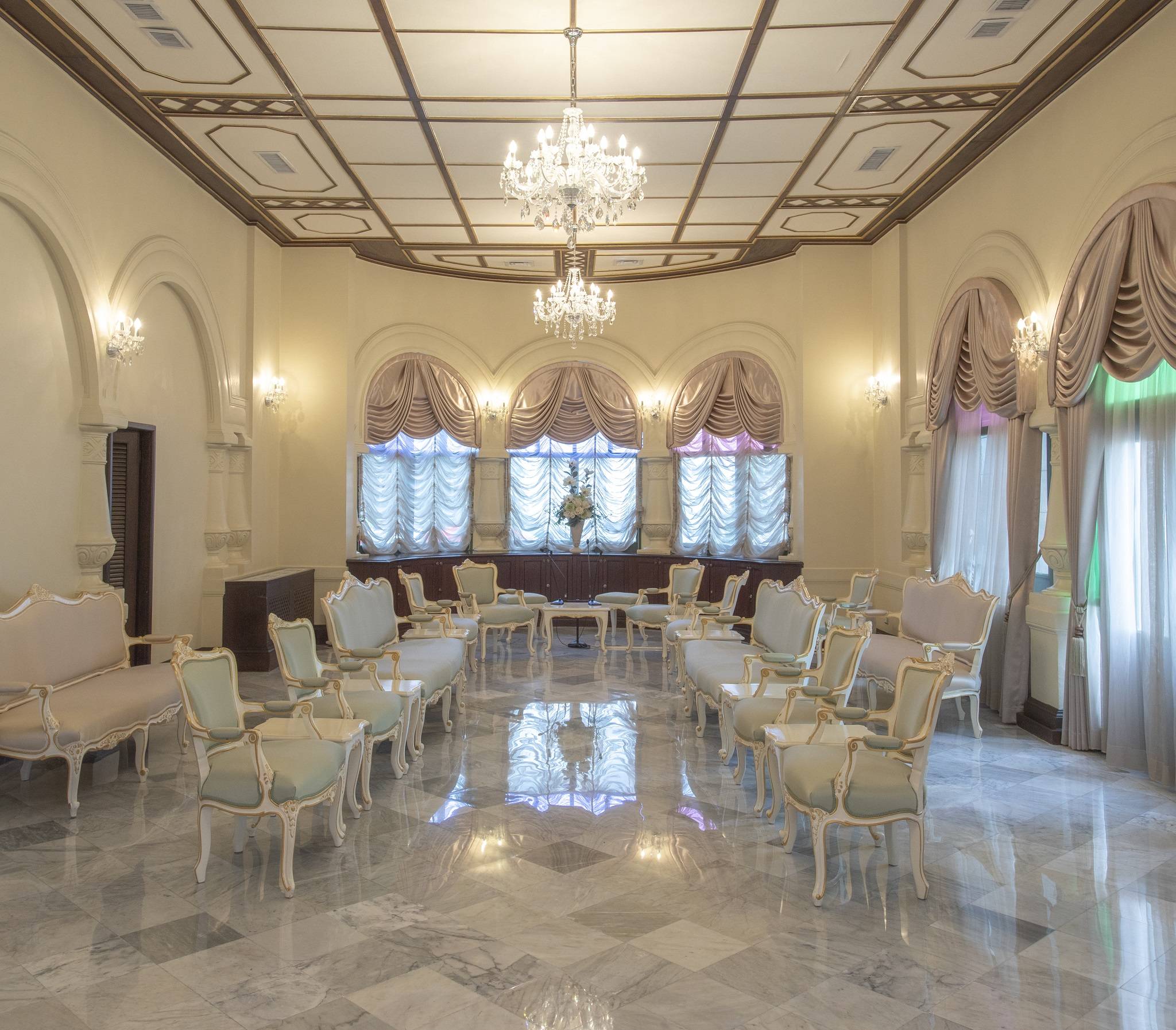
At the centre of the structure is a large hall with a dome-shaped roof that has been converted into the Nari Samoson Reception Room 1, which is used for events hosted by the deputy prime ministers and ministers attached to the Prime Minister’s Office as well as ceremonies such as the signing of agreements. To the left of the hall is the Nari Samoson Reception Room 2, which features a polished marble floor with alternating patterns. The room’s ambience is enhanced by a cream colour scheme and soft green, antique, French-style furniture.
Attached at the southern side of the Nari Samoson Building is the SaengAthit Building, a three-story tower with a spiral staircase leading to the second and third floors. At the top is a door leading outside where, in the past, there were connecting walkways to nearby buildings such as the Phungbun Building. However, over time, most of these structures have been demolished and today, only traces of the bridge appear in the awning over the entrance.
Like the Nari Samoson Building, the SaengAthit Building has been meticulously maintained, undergoing a number of renovations. In 2005, it was also presented with the Outstanding Architectural Conservation Award as part of the Government House compound.